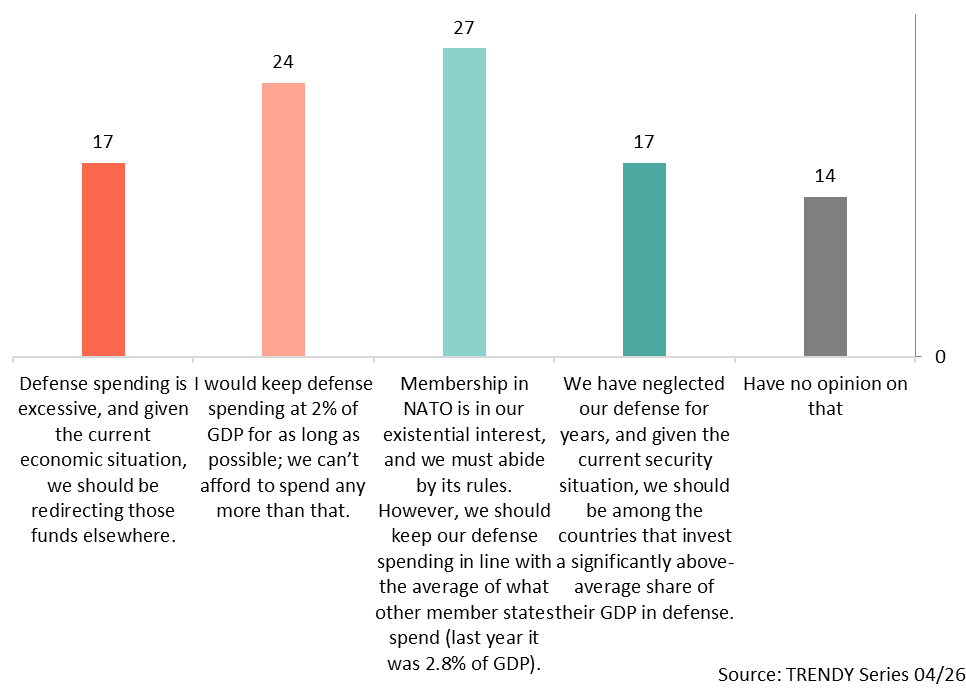
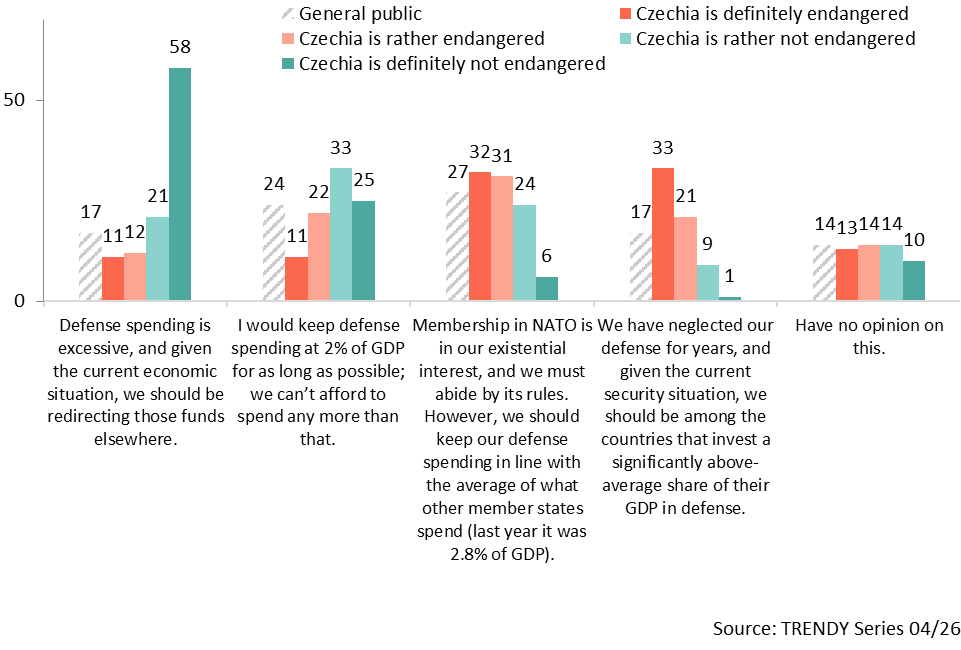
The level of defense spending has long been a subject of dispute not only between the governing coalition and the opposition, but also within the government itself, as it remains unclear whether we are meeting the NATO’s requirements and how we will meet them in the future. Following last year’s NATO summit, the STEM Institute for Empirical Research revised the wording of the question on defense spending to clarify how the Czech public views the new commitment to a gradual increase to 5% of GDP, of which 3.5% is allocated to military spending and the remainder to defense-related projects (e.g., transportation infrastructure). “Our assessment from previous years has been confirmed: Czechs are not the biggest hawks in the alliance and do not want excessive investment in the military, but they certainly do not want to be at the bottom of the list or even reduce defense spending,” says STEM analyst Jiří Táborský.
The largest share of Czechs (more than a quarter) believe that it is in our existential interest to be in NATO and that defense spending should therefore be at the NATO average. A quarter of the population tends to prefer maintaining spending at the current level of approximately 2% of GDP. Furthermore, there are two distinct groups within the population, each comprising about one-fifth of the population: one wishes to reduce spending, while the other, on the contrary, wishes to significantly increase it, pointing out that we have neglected military spending for years.
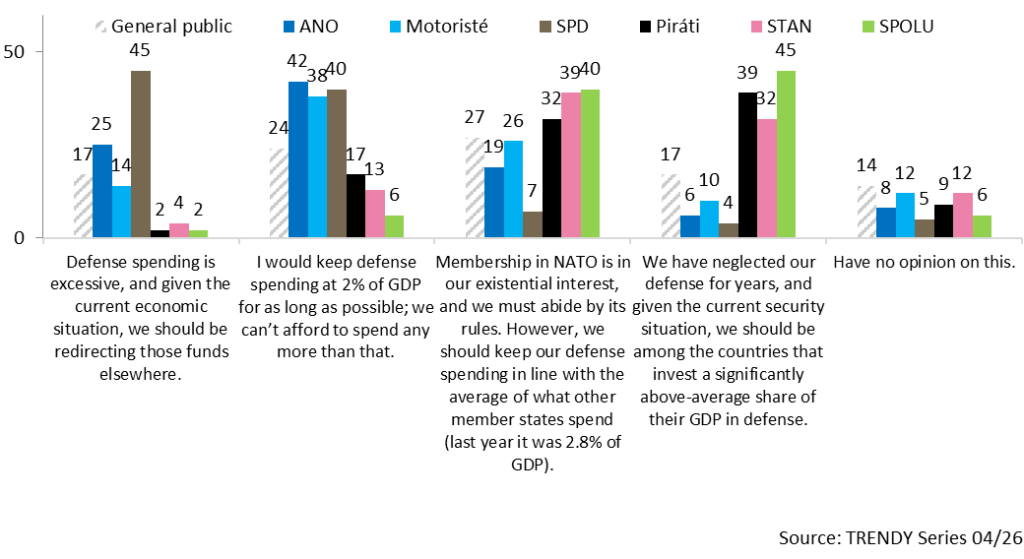
“These attitudes are linked to a number of other views, and generally speaking, political convictions and a sense of threat to the Czech Republic in the current situation have a significant influence. A certain connection can also be found with the household’s economic situation. Generally speaking, people who are more financially secure, voters of the former government, and people who perceive a threat to the Czech Republic are in favor of increasing defense spending,” explains Táborský, adding that older people and those with lower levels of education are also more likely to oppose defense spending.
„In 2025, the Czech Republic spent 2% of its GDP on defense. The new commitment to NATO adopted last year calls for defense spending to gradually increase to 5% by 2035 (3.5% for defense projects and 1.5% for defense-related projects).“
Approach to defense spending based on the election to the Chamber of Deputies in October 2025
Approach to defense spending based on a perceived sense of threat
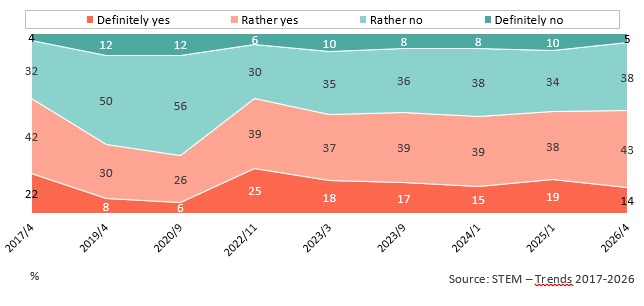
The study also examined perceptions of the Czech Republic’s sense of threat in the current international situation. “Since the start of the war in Ukraine, the sense of threat has remained at very high levels, and global events offer no indication that it is likely to subside. However, it is interesting to observe the differences in the perception of the sense of threat between political camps. While voters of the former government perceive the threat as very high, among those who voted for the parties of the current government, it is significantly lower, which is then reflected in other attitudes, such as the willingness to spend money on defense mentioned above,” says Táborský.
Do you think that the security of the Czech Republic is at threat in the current international situation?”
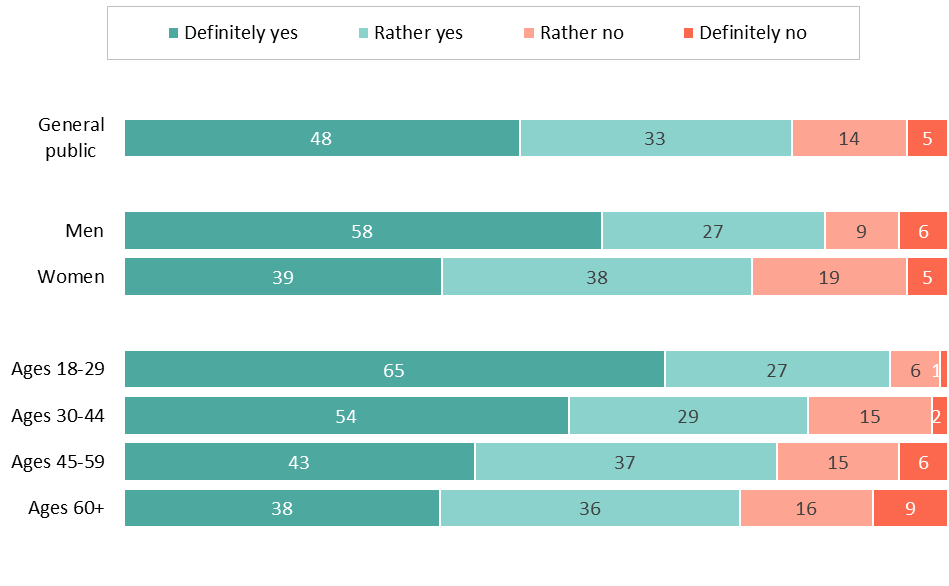
However, one area where Czechs—both men and women—are practically in agreement is their support for NATO membership. This institution generally enjoys a high level of trust among the Czech public, and this sentiment is shared across voter groups and other segments of society. This positive attitude toward the alliance is also reflected in attitudes toward defense spending, as Czechs have long tended to show greater support for the alliance in various survey questions. “NATO enjoys very high trust in the Czech Republic, not only in general surveys on trust in this or that institution, but also when it comes to specific tasks, such as ensuring our external security. Simply put, NATO has a good reputation among Czechs, and violating its rules does not have much support in the Czech Republic,” says Táborský, noting that support for NATO membership is also influenced by age and gender, but remains well above 50% across all groups.
“Do you support the Czech Republic’s membership in NATO?” (total of “rather yes” and “definitely yes” responses)
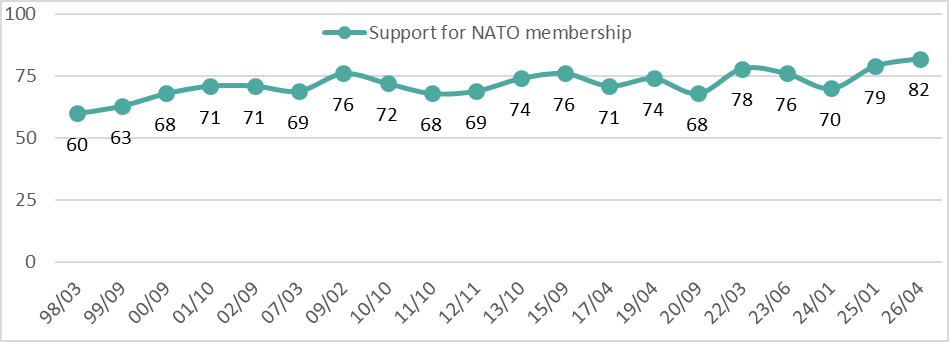
Source: TRENDY Series 1996–2026
„Do you support the Czech Republic’s membership in NATO?”
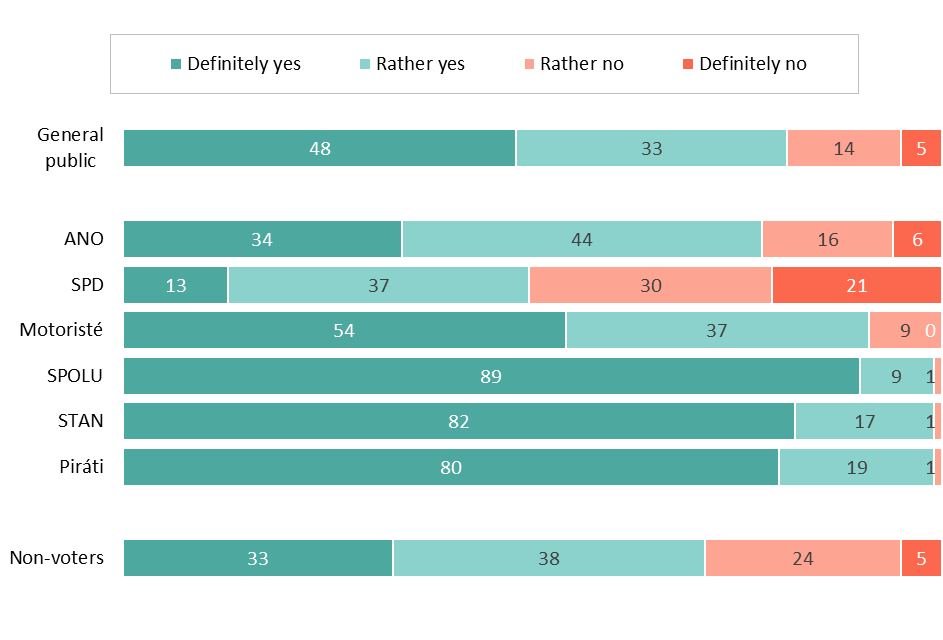
Source: TRENDY Series 04/26
„Do you support the Czech Republic’s membership in NATO?”
Source: TRENDY Series 04/26
The cited research by the STEM Institute for Empirical Research (www.stem.cz) was conducted on a representative sample of the Czech population aged 18 and older between April 22 and 30, 2026. Respondents were selected using a quota sampling method. A total of 1,315 respondents answered the questions via an online survey (CAWI). Data from other surveys in the Trendy Series, which are conducted using a similarly representative methodology on a sample of approximately 1,000 respondents, are also used.