The Czech public’s relationship with most European countries has slightly improved. Russia, China and Palestine received worse ratings.

According to a February survey by STEM, the attitudes of the Czech public toward most European countries are slightly more positive than in 2025. Italy has joined Switzerland and Austria among the highest-rated countries. On the other hand, the STEM survey recorded a year-on-year decline in sympathy towards China, Palestine, Russia and Serbia. It is important to emphasize that the survey was conducted before the start of the US and Israeli attack on Iran.
The office of the Pope continues to enjoy the highest level of popularity among foreign representatives. Although there was a change at the head of the Catholic Church last year, with Pope Leo XIV succeeding the late Pope Francis, he has become established among the Czech public as the most positively perceived figure in the entire ranking. By contrast, Russian President Vladimir Putin remains the most negatively perceived.
Americans remain liked among Czechs, even though the popularity of the USA has fallen to a historic low.
Czech men and women continue to have a positive attitude toward Slovaks and citizens from economically developed countries. Thus, both Americans and Slovaks remain among the most acceptable neighbours within the Czech Republic, even though the popularity of their countries has significantly declined in the eyes of the Czech public. “It turns out that in the case of certain countries, we are able to separate the politics of a given state from the foreigners who live here,” adds Kateřina Duspivová, an analyst at STEM. Czechs’ attitudes toward foreigners are still influenced by the war in Ukraine. After the Russian invasion, Ukrainians became more acceptable neighbours to Czechs than Russians, whereas before the war it was the other way around. Acceptance of other nationalities, especially from middle eastern countries (e.g., Arabs, Syrians, or Afghans), remains consistently low.
Czech Skepticism About the War in Ukraine Continues to Grow

Fatigue and skepticism among Czechs regarding the further development of the conflict in Ukraine continue to increase. While at the beginning of this year, the most likely scenario was seen as an end to the fighting in exchange for the loss of eastern territories to Russia and, in return, security guarantees for Ukraine, the currently most anticipated outcome is that the war will not end for several more years and will instead continue at a lower intensity. This stems from the latest survey by the STEM research institute, conducted in June 2025 (and therefore does not reflect the recent developments related to the shift in position by U.S. President D. Trump).
The Czech public feels growing fatigue towards the war in Ukraine, but anti-Ukrainian sentiments are not on the rise
The January 2025 survey of the STEM Research Institute shows a slight revival of interest of the Czech public in the ongoing war in Ukraine. Yet, war coverage has not been one of the main topics of interest for most people for some time already. Czechs overwhelmingly want a quick end to the war in Ukraine. Among the most preferred scenarios for ending the war are solutions that would provide Ukraine with security guarantees, even if the country does not regain all the territories occupied by Russia. Only a small part of the public considers as the most probable the complete victory of Ukraine or, on the contrary, its full surrender. Most people see the loss of eastern Ukraine as the most likely outcome of the war. Attitudes towards Czech military aid to Ukraine are divided – almost half of the Czech public sees it as too high, while about a third consider it adequate.
A stable majority of people (54% in January 2025) have supported the stay of Ukrainian refugees in the Czech Republic in recent years. Still, Czechs remain wary of the refugees, perceiving them as a threat rather than an asset to society – even if this sentiment is gradually shifting towards a more conciliatory attitude. While the public generally supports easy integration of Ukrainians into the labour market, there is a prevailing belief that the number of arriving refugees should be capped, and that the state should ensure that the Ukrainians who currently are in the country return to Ukraine. The integration of refugees into the labour market is perceived by more people as successful than unsuccessful, while language and cultural integration are perceived as less successful. Thus, reservations about refugee integration are more likely to be linked to concerns about language barriers or culture differences rather than job competition. Criticism of the Czech government in relation to refugees is quite widespread – the feeling that it has done more for Ukrainians than for its own citizens clearly prevails. Overall, Czech society seems to be taking an increasingly pragmatic approach to Ukrainian refugees, with an emphasis on their active inclusion.
Anti-EU sentiments declined last year in the Czech Republic

The popularity of anti-EU sentiments has decreased slightly in recent years in the Czech Republic. This is despite the fact that the Czech public has generally been sceptical about domestic developments. Positive trends can be seen regarding satisfaction with EU membership, and the share of those who would vote to leave in a possible referendum on EU exit has also decreased slightly. The data comes from a large survey conducted in September 2024 by the STEM Research Institute for the Representation of the European Commission in the Czech Republic.
Most Czechs prefer a Ukrainian victory, but do not consider it likely at the same time
Among the possible scenarios for the development of the war in Ukraine, most Czechs participating in the June 2024 survey of the STEM Research Institute wished for Ukraine to win its war with Russia and regain its lost territory. However, this most preferred scenario was also considered the least likely and people rather expected a “cementation” of current positions. Another important finding was that awareness of and interest in information about the war in Ukraine was associated with the strengthening of both the unequivocally pro-Russian view and the unequivocally pro-Ukrainian view. Building on previous research, the study also looked at awareness of the so-called Czech ammunition initiative and found that awareness of the initiative tends to decline over time, which seems to be related to lower interest in the topic of Ukraine as such, as well as continued war fatigue. In terms of aid to Ukraine in general, over 40 percent of people consider Czechia’s aid to be disproportionately high and 57 percent consider the aid to be a threat to the country’s national security.
Support for the presence of Ukrainian refugees remains stable. The Czech public is becoming accustomed to them
A narrow majority of the Czech public supports the Czech Republic continuing to allow refugees from Ukraine to stay in the country, according to a June survey of the STEM Research Institute. The people agree overwhelmingly that the government should support an easy participation of Ukrainians in the labour market. Four out of five Czechs have met a person from Ukraine. Neither positive nor negative attitudes prevail when evaluating these personal experiences, with mixed feelings being the most common. Only about a quarter of people report direct experience of problems or conflicts involving Ukrainians. Compared to the situation a year ago, i.e. in June 2023, we can see that the most strident anti-Ukrainian attitudes and emotions are wearing down.
25 years after the Czech Republic joined NATO, a clear majority of its citizens support the country’s membership
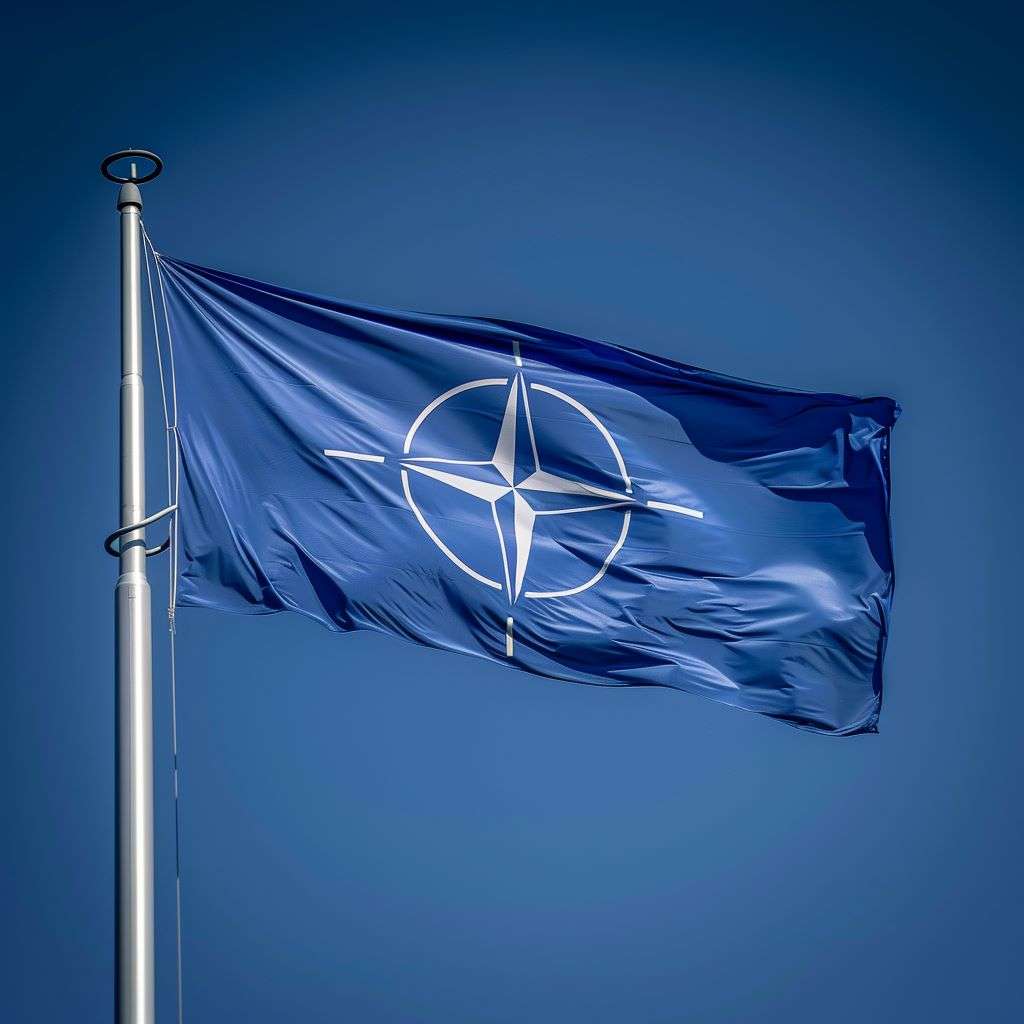
Czech citizens’ trust level in NATO as institution has been slightly over 50 per cent for a long time. As for the support of NATO membership, 70% of the Czech population approves. These findings come from a survey conducted in January 2024. At the same time, this report also shows the development of attitudes towards NATO over time, which “shows a strengthening of the level of approval of NATO membership in times of crisis: in 2015 in the case of the migration crisis, and in 2022 after Russia’s attack on Ukraine,” says Jitka Uhrová from the STEM Research Institute.
The Support of the Czech Public for Ukrainian Refugees Still Strong
Even more than two years after the start of the war in Ukraine, the majority of the Czech public is not opposed to the stay of Ukrainian refugees on the country’s territory. At the same time, however, fatigue from the protracted conflict is showing, as the majority of people would prefer a quick end to the conflict, even at the cost of Ukraine losing some of its territory. There is a slight difference among young people aged 18-29, who, while also mostly in favour of a quick end to the conflict, are more likely to state support for Ukraine until it regains the lost territories. These are the results from both January 2024 data from STEM Research Institute and long-term trend monitoring.
Russian aggression against Ukraine: Survey of Czech attitudes

This analysis of the STEM Institute for Empirical Research focuses on key impacts of the Russian war of aggression against Ukraine and its perception in the Czech society. This analysis of the STEM Institute for Empirical Research focuses on key impacts of the Russian war of aggression against Ukraine and its perception in the Czech society. Equally pressing is the issue of nearly 300,000 Ukrainian refugees who fled to the Czech Republic.
