Czechs trust the uniformed: firefighters, the police, and the army are the most trusted institutions in the country

The newest data on the Czech’s public trust in selected institutions show that fire brigades are the most trusted one, with 92 per cent of the population perceiving them favourably. Trailing the fire brigades are the other two security forces: the police with 74 per cent trust and the army with 70 per cent trust. There have been no major changes in trust felt towards political and other constitutional institutions, and there are still varying levels of trust in some institutions based on political preferences. The data comes from a survey conducted by the STEM Research Institute in early October 2024.
STEM flash survey on September 2024 floods in the Czech Republic
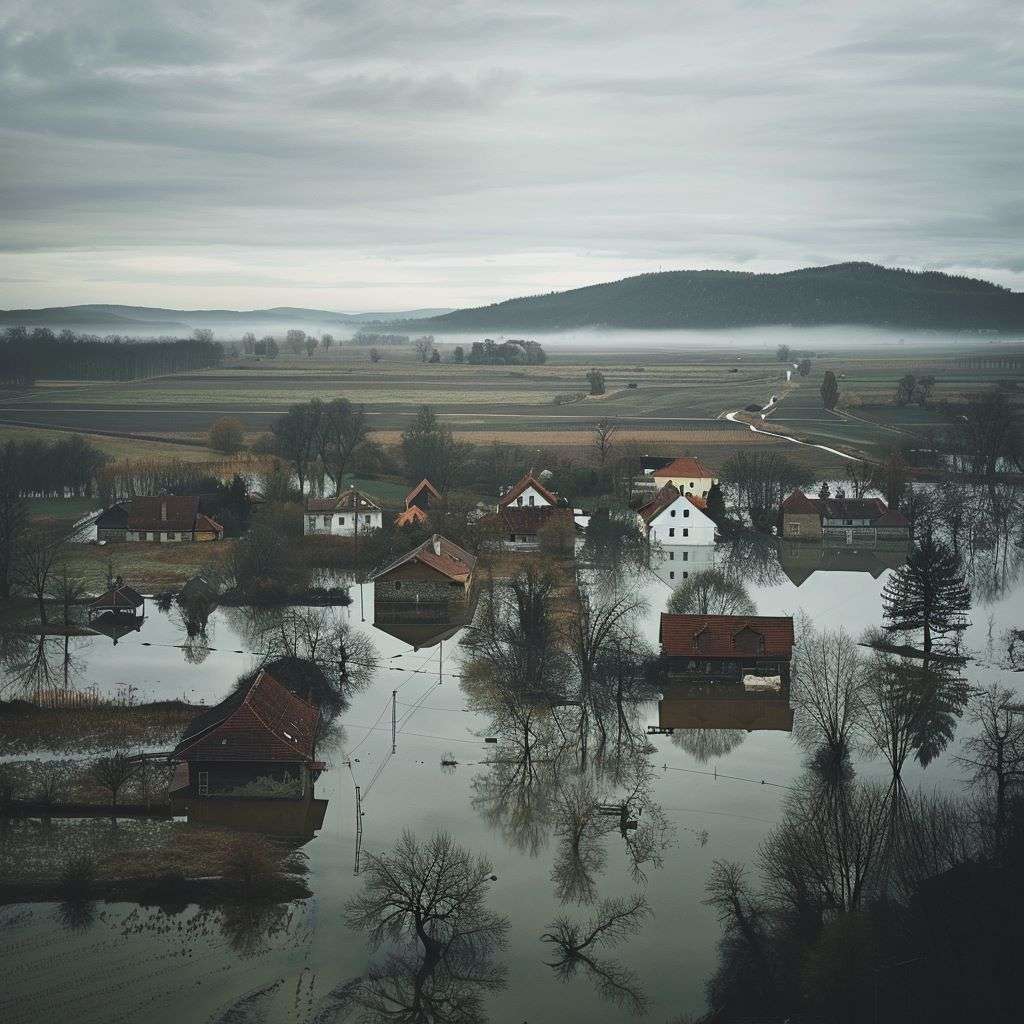
STEM conducted a flash survey for CNN Prima News on the attitudes of the Czech public and its evaluations of the reaction to the September 2024 floods in the Czech Republic. The research was conducted in a very short time (17–19 September) and only by online polling, so it is more representative of a more active and involved part of society. The survey was conducted shortly before the 2024 regional elections and also shortly after the culmination of the flood crisis, so for both topics it captured the current mood, which was at the same time dynamically evolving. At time of publication, the public has not yet fully absorbed all the flood events, so some attitudes are not strongly entrenched in the public mind and may change.
45% of surveyed Czech pupils have already tried AI tools, according to “How We Learn” research for Nekrachni

Czech pupils look forward to school mainly because of their friends, and they usually have good relationships with their teachers. However, they are often not very interested in lessons, have difficulty concentrating and do not think they are learning things that they can use outside the education system itself. These are the findings of the “How We Learn” survey conducted by STEM for the non-profit educational organisation Nekrachni. The survey among pupils aged 11-19 maps the current learning habits of Generation Z, their preferences and needs in education, and the way they work with AI tools.
The Czech public’s attitude towards most countries remains stable, with Israel and Palestine worse off

Attitudes of the Czech public towards other countries and foreign politicians remain at similar levels in mid-2024 as they were in a survey a year ago. Slovakia is still the top-ranked country, but Austria has caught up in the proportion of people who have a favourable attitude towards the Alpine country. Furthermore, Slovakia’s new President Pellegrini has a substantially lower rating from the Czech public than the country’s former President Čaputová. The latter became the highest-rated foreign politician, along with Pope Francis. People report the worst attitudes towards Russia and its President Putin.
When evaluating countries using Czech school grades, the average grade deteriorated the most for Palestine (by 0.3) and Israel (by 0.2), and there is a slight deterioration in the relationship to Ukraine and Slovakia. In contrast, the assessment of the US, Russia and major European countries is almost unchanged. Among statespersons, the most significant change was in the assessment of Ukrainian President Zelensky, which dropped by eight percentage points.
Decline in trust in the army among the Czech public is linked to political preferences
The decline in trust in the Czech Armed Forces, which has been going on for several years as pointed out by the STEM Research Institute in mid-March, is related to political preferences. While in 2020 it did not matter whom survey respondents voted for, as the army was trusted by everyone across the political spectrum, currently there are differences in trust in the army by tens of percentage points across supporters of the currently strongest political parties. This was revealed in an analysis by STEM, which was presented to members of the Czech parliament defence committee along with other data relating to defence and security.
Confidence in the army declines in the Czech Republic, but is at high levels among the young population
Confidence in the military across the population has gradually declined for the fourth year in a row, reaching 62% in January 2024, the lowest since 2008. However, among young people aged 18-29, confidence in the military is significantly higher, with 79% trusting the institution. Support remains strong for membership in NATO, which the Czech Republic joined 25 years ago. 70% of respondents agreed with NATO membership. These findings come from a survey conducted this January by the STEM research institute as part of a long-term monitoring of opinion trends in the Czech population.
The Czech public believes that weapon legislation should be tightened significantly

According to the Czech public, legislation regulating the possession of weapons should be significantly tightened, with 54% of Czechs holding this opinion, according to a recent STEM Research Institute survey. “Still, it is important to distinguish what people mean by a ‘significant tightening’. For most, it is not a complete ban on the possession of weapons, as 70% of participants opposed such a measure. Yet, nearly 81% of the public would support more frequent medical examinations for gun owners, including mandatory psychological tests. Furthermore, 72% of participants would agree with limiting the number of weapons a person can own, and 64% would agree with limiting the number of ammunition for private use,” STEM analyst Jiří Táborský said.
Electricity sharing in Czech blocks of flats – analysis

Most apartment owners like the idea of elektricity sharing within their residential buildings. Owners state that they would be in favor of its implementation. Paradoxically, a significantly smaller number of them believe they could secure the necessary votes within their unit. Owners are most interested in information about the return on investment and a detailed description of the technical implementation process.
Towards a model that measures the impact of disinformation on elections

Disinformation represents a danger to the integrity and legitimacy of the electoral process. From our research based on the 2021 Czech parliamentary elections, we introduce a model for measuring the resilience of citizens to disinformation.
One Society – Different Worlds

The study One Society — Different Worlds, exploring lines of conflict in Czech society, came out in Czech in June 2021. It was produced by the Masaryk Democratic Academy and the Friedrich-Ebert-Foundation’sPrague office, together with the market research agency STEM.
